


How Developers Can Make Money Selling Source Code Online: A Complete Guide for Digital Product Creators
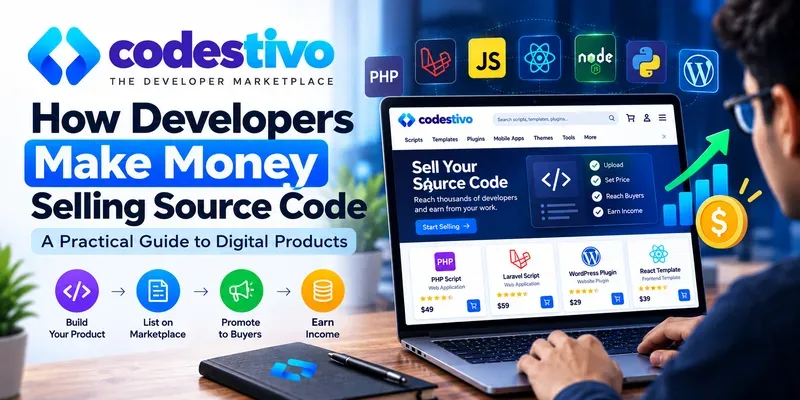
How Developers Can Make Money Selling Source Code Online
Developers spend time building websites, applications, scripts, plugins, and other software projects. But did you know that some of these projects can also become digital products that you sell online?
Selling source code gives developers another way to earn money from their technical skills. Instead of building every project for a single client, you can create reusable software that other developers, businesses, and entrepreneurs may find useful.
However, making money from source code takes more than writing code. You need a useful product, clear documentation, sensible pricing, good presentation, and a way to reach potential buyers.
In this guide, we will explain how developers can start selling source code online in simple terms.
What Does Selling Source Code Mean?
Source code is the programming code used to build software, websites, applications, and other digital tools.
When you sell source code, you offer a software project that buyers can purchase and use according to its license. Depending on the product, buyers may be able to install it, customize it, or use it as a starting point for their own projects.
Examples include PHP scripts, Laravel applications, JavaScript tools, WordPress plugins, website templates, mobile app templates, admin dashboards, and business management systems.
Why Sell Source Code Online?
Selling source code can help developers turn their skills and existing projects into products that reach more people.
- Reuse your work: A useful project may be suitable for more than one customer.
- Reach more buyers: An online marketplace can help you present your work to people beyond your local area.
- Build a product portfolio: Each product can demonstrate your skills and experience.
- Learn about business: Selling products teaches you about pricing, customer needs, marketing, and support.
- Create additional income opportunities: Product sales can complement client work or other income sources.
Remember that income is not guaranteed. Results depend on product quality, demand, competition, pricing, promotion, and many other factors.
1. Choose the Right Type of Source Code
Your first step is to decide what kind of digital product you want to sell.
You do not always need to start a completely new project. You may already have code that can be improved and prepared for other users.
Here are some product ideas:
- PHP scripts: Contact forms, booking systems, invoice generators, and other web tools.
- Laravel applications: Admin panels, business management systems, and web applications.
- JavaScript tools: Interactive widgets, calculators, and reusable components.
- WordPress plugins: Features that extend WordPress websites.
- Website templates: Ready-made designs for business websites, portfolios, and landing pages.
- Admin dashboards: Interfaces for managing users, orders, reports, and other data.
- Mobile app templates: Reusable starting points for mobile applications.
- AI-powered tools: Applications that use AI APIs to perform useful tasks.
- E-commerce tools: Product management, order processing, and other online store features.
Choose a product you understand well enough to test, document, and maintain.
2. Solve a Real Problem
A product is more useful when it solves a clear problem.
For example, a small business may need an appointment booking system. A freelancer may need an invoice generator. A website owner may want a simple admin dashboard.
Before building your product, ask yourself:
- Who will use this product?
- What problem does it solve?
- Why would someone choose it over an alternative?
- Can the product save time or simplify a task?
- Can I explain its main benefit in one sentence?
You can also study existing products and customer feedback to understand what buyers need. Research competitors to identify opportunities, but create your own original product and content.
3. Prepare Your Code for Buyers
Code that works on your own computer may not be ready for sale.
Before publishing, make sure the project is organized and can be installed in a clean environment.
- Remove unnecessary development files.
- Organize folders and important files clearly.
- Test the main features.
- Check compatibility with the listed system requirements.
- Remove passwords, API keys, private tokens, and personal data.
- Include example configuration files where appropriate.
- Check that you have the right to sell all included code and assets.
Never include credentials or private information in a downloadable product.
4. Write Clear Documentation
Good documentation makes your product easier to install and use.
Include the information buyers need to get started, such as:
- Product overview
- System requirements
- Installation steps
- Database setup
- Configuration instructions
- API setup, if required
- Common troubleshooting steps
- Support information
Use simple language and screenshots when they help explain a process. Clear instructions can also reduce repeated support questions.
5. Choose a Suitable Selling Platform
Once your product is ready, you need a place where potential buyers can discover it.
Depending on your product and business model, you can sell through your own website or use a digital marketplace.
A marketplace can provide a product listing system where buyers browse categories, compare products, and review descriptions before purchasing.
Before choosing a platform, check its seller rules, fees, payment methods, product requirements, license policies, and support arrangements.
Codestivo is a developer marketplace where creators can publish digital products such as source code, scripts, templates, plugins, tools, and other resources.
6. Create a Product Listing That Buyers Understand
Your product page should answer the questions a potential buyer is likely to ask.
Include a descriptive title, a clear overview, important features, supported technologies, system requirements, screenshots, and installation information.
Explain exactly what is included in the download and what is not included.
For example, if your product requires a paid third-party API, additional hosting, or a separate subscription, explain that clearly.
A useful product listing helps buyers understand whether your product fits their needs before they purchase it.
7. Set a Reasonable Price
Pricing can influence whether buyers consider your product.
Start by comparing similar products and evaluating what your own product offers. Consider its features, quality, documentation, usefulness, and support requirements.
Do not base your price only on the number of hours you spent coding. Buyers also consider the value the product provides and the alternatives available to them.
Remember to account for marketplace fees, payment processing fees, taxes, maintenance, and support when calculating your potential profit.
You can adjust your pricing as you learn more about buyer interest and feedback.
8. Use Screenshots and Demos
Buyers often want to see how a product works before purchasing it.
Use clear screenshots to show the main interface, dashboard, important features, and mobile layout where relevant.
If possible, provide a live demo that lets potential buyers explore the product.
Make sure the demo works correctly and does not expose real customer data, private credentials, or sensitive administrative functions.
9. Promote Your Source Code
Publishing a product does not guarantee that buyers will find it. Promotion can help more people discover your work.
Consider these approaches:
- SEO: Publish useful pages that answer questions related to your product.
- Blogging: Write tutorials that explain the problem your product solves.
- YouTube: Demonstrate how the product works and how to use it.
- LinkedIn: Share development lessons, product updates, and useful demonstrations.
- Developer communities: Participate in relevant discussions and follow community rules.
- Email: Send useful updates to people who have chosen to receive them.
- Social media: Share genuine product improvements, examples, and tutorials.
Avoid spam and misleading claims. Helpful content is a better foundation for long-term trust.
10. Use SEO to Help Buyers Find Your Product
Search engine optimization can help people discover your product through relevant searches.
Use a clear product title and describe the actual features and use cases. Include relevant keywords naturally rather than repeating the same phrase unnecessarily.
For example, a booking system might be relevant to searches about appointment booking software or a PHP booking script, depending on what the product actually supports.
Write useful documentation and tutorials, and link to your product where it genuinely helps the reader.
11. Provide Reliable Customer Support
Buyers may need help with installation, configuration, or understanding a feature.
Explain your support policy before purchase and respond professionally to reasonable questions.
You do not have to provide unlimited custom development. Make clear what is covered by the product and what would require separate paid work.
Good communication helps set expectations and can improve the buyer experience.
12. Maintain and Improve Your Products
Software may need updates as programming languages, frameworks, dependencies, and server environments change.
When necessary, fix bugs, improve compatibility, update documentation, and address security issues.
Listen to customer feedback and look for repeated requests that could improve the product for many users.
Keep track of versions so buyers can understand what has changed between releases.
13. Understand the License and Your Responsibilities
Before selling source code, make sure you have the legal right to distribute every part of the product.
Check the licenses for third-party libraries, fonts, images, icons, and other assets. Do not sell code or assets that you do not have permission to redistribute.
Choose clear license terms and explain what buyers are allowed to do with the product.
Also follow the selling platform's rules and applicable legal and tax requirements.
14. Learn From Your Sales and Feedback
After publishing, review how people respond to your product.
When the information is available, monitor product views, purchases, customer questions, reviews, and refund reasons.
If visitors view your listing but do not buy, review the product description, screenshots, price, and clarity of the offer. If buyers struggle after purchase, improve the documentation or installation process.
Use real feedback to decide what to improve next instead of guessing.
Common Mistakes to Avoid
New sellers can make avoidable mistakes when publishing their first products.
- Publishing code without testing it.
- Including private credentials or sensitive data.
- Using unclear titles and incomplete descriptions.
- Ignoring documentation.
- Choosing a price without researching alternatives.
- Making claims about features that do not work.
- Using assets without permission.
- Ignoring customer questions and product updates.
- Expecting immediate sales without promoting the product.
Taking time to prepare your product properly can help you avoid many of these problems.
A Simple Plan for Your First Source Code Product
If you are just starting, follow this practical sequence:
- Choose one useful project.
- Identify the buyers who may need it.
- Prepare and test the code.
- Write installation documentation.
- Create screenshots and a demo if possible.
- Research comparable products and set a price.
- Publish a clear and honest product listing.
- Share useful content that attracts relevant visitors.
- Respond to buyer questions and improve the product.
Start with one product and learn from the process before investing in a large catalog.
Final Thoughts
Selling source code online can give developers another way to use their technical skills and share useful software with a wider audience.
The best starting point is a product that solves a real problem and is easy for buyers to understand, install, and customize.
Prepare the code carefully, write clear documentation, set a reasonable price, present the product honestly, and continue improving it based on feedback.
Results take time, and sales are never guaranteed. Focus on building something useful and making it easy for the right buyers to discover.
Have a useful script, template, or application ready to share? Explore Codestivo and discover opportunities to publish your digital products.
0 Comments